
If you’re searching for clarity on consumer tech trends 2026, you’re likely tired of incremental updates disguised as breakthroughs. The coming year won’t be about slightly faster chips or marginal camera bumps—it will mark a shift toward deeply integrated, AI-driven experiences that reshape how devices interact with you and with each other. In this article, we cut through speculation to examine the technologies already in late-stage development, from next-gen gaming ecosystems to truly automated smart homes powered by advanced sensors and seamless connectivity. Drawing on industry roadmaps, prototype demonstrations, and verified product pipelines, we provide a grounded look at the tech that will actually be in your hands.
Ambient Computing: Your Tech Will Finally Disappear
The idea of Zero-UI (zero user interface) means you stop tapping, swiping, or issuing commands—technology simply responds. Instead of opening five apps before breakfast, your devices anticipate needs and act in the background. It sounds futuristic, but it’s already forming the backbone of consumer tech trends 2026.
Skeptics argue people want visible control. Fair point. Yet research from Gartner predicts that by 2027, over 70% of consumer interactions with smart devices will occur through automation or contextual triggers rather than manual input. Convenience wins (it usually does).
Device Integration Gets Real
Standards like Matter 2.0—a universal smart-home protocol—are solving interoperability, meaning devices from different brands finally “speak” the same language. For example:
- Your car signals arrival time to your thermostat
- Lights adjust based on time and occupancy
- Security systems sync across ecosystems
This isn’t hype—major brands have already adopted Matter-certified updates.
The Rise of Localized AI
Localized AI refers to artificial intelligence processed directly on your device instead of the cloud. Apple and Qualcomm report up to 40% faster response times with on-device inference, plus improved privacy.
Imagine this: your smartwatch detects poor sleep, checks traffic data, shifts your calendar, and starts your coffee maker earlier. No commands. No dashboards. Just coordination.
(Pro tip: Prioritize devices labeled “Matter-compatible” to future-proof your setup.)
Gaming’s New Reality: Immersive Haptics and AI-Driven Worlds
For years, gaming innovation meant sharper textures and higher frame rates. Now, however, the spotlight has shifted. In 2026, physical immersion is redefining play. High-definition haptics—advanced vibration systems capable of simulating texture, resistance, and directional force—are turning controllers into sensory translators. Instead of a generic rumble, you can feel the crunch of gravel under tires or the recoil pattern of different weapons (yes, even the difference between a shotgun and a plasma rifle).
At the same time, HSS (Haptic Signal Standard) compatibility is solving a major frustration: fragmented device support. A universal standard allows one controller or haptic suit to deliver nuanced feedback across PC, console, and cloud platforms. That means fewer driver headaches and more plug-and-play consistency. Pro tip: always check firmware update support before buying cross-platform gear—it extends device lifespan significantly.
Meanwhile, AI is becoming the ultimate game master. Non-player characters (NPCs)—digital characters controlled by algorithms rather than humans—are evolving beyond scripted dialogue trees. Powered by machine learning, they now retain long-term memory and adapt to player behavior. Ignore a faction in an RPG, and it may weaken politically. Betray an ally, and expect consequences hours later. These emergent behaviors (unscripted outcomes arising from complex systems) are central to consumer tech trends 2026.
Finally, controller setup is no longer just button mapping. Players can now tune:
- Haptic intensity zones
- Trigger tension curves
- Genre-specific adaptive feedback profiles
In short, immersion isn’t about what you see anymore. It’s about what you feel—and how intelligently the world responds.
The Proactive Smart Home: From Reactive to Predictive

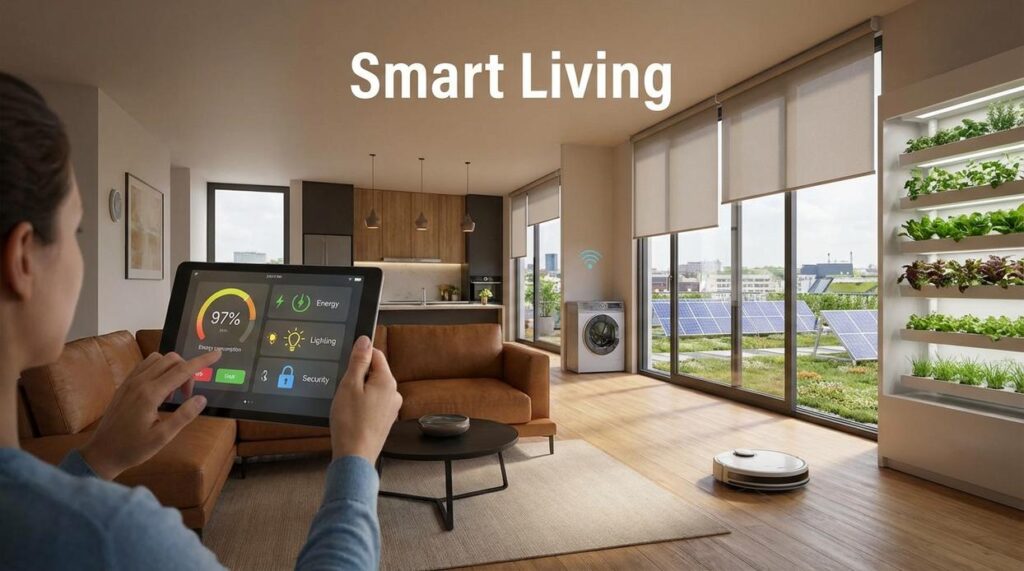
The era of tapping “Good Morning” is fading. In 2026, smart homes won’t wait for commands—they’ll anticipate them. Instead of fixed routines (pre-set chains of actions triggered manually), predictive automation uses learned behavior patterns to adjust lighting, temperature, and even music before you ask. The benefit? Less micromanaging, more living.
This shift is powered by sensor fusion—the blending of data from motion detectors, microphones, ambient light sensors, and even Wi‑Fi signal distortion (tiny disruptions in wireless signals that reveal movement). Together, they create a real-time model of your home’s activity. If you’re binge-watching a show at midnight, lights dim and HVAC adjusts automatically (yes, it’s giving subtle sci‑fi vibes—but practical).
Energy management becomes smarter, too:
- HVAC adapts to utility peak pricing.
- Appliances run during lower-rate windows.
- Lighting responds to occupancy, not guesswork.
The payoff is measurable: the U.S. Department of Energy notes smart thermostats can cut heating and cooling costs by about 8–10% annually.
At the center sits a home hub—an on-device AI brain reducing cloud dependence for faster, private decisions. It’s a defining force in consumer tech trends 2026 and a clear example of how ai powered devices are reshaping everyday life.
Bottom line: you save time, energy, and money—automatically.
Wearables as Digital Coaches: Beyond Step Counting
Wearables are shifting from passive trackers to active digital coaches. Instead of simply displaying heart rate or sleep scores, newer systems translate data into real-time prompts—“Your posture is causing strain” or “Take a short walk to stabilize glucose.” This evolution is backed by evidence: Gartner projects that by 2027, over 40% of wearable users will rely on AI-driven health nudges for daily decisions (Source: Gartner, 2025). In other words, your wrist is starting to sound like a personal trainer.
At the same time, non-invasive biosensors are advancing quickly. Researchers at MIT and Samsung have demonstrated optical glucose monitoring prototypes, signaling a future where hydration and blood sugar can be tracked without needles (Source: Nature Biomedical Engineering, 2024). That’s a leap from data to dialogue.
Meanwhile, mental wellness tech integrates heart rate variability with guided breathing when stress spikes—biofeedback in action. As consumer tech trends 2026 unfold, expect wearables to coach, not just count.
Stay Ahead of the Game in 2026
You came here to understand where controllers, connectivity, and device integration are heading—and now you have a clear view of how consumer tech trends 2026 are reshaping the way we play. From smarter compatibility to seamless cross‑platform setups, you’ve seen what’s changing and why it matters for your gaming experience.
The real frustration isn’t a lack of new gear—it’s buying devices that don’t sync, lag during play, or become outdated within months. Staying informed is how you avoid wasted money, setup headaches, and performance bottlenecks.
Here’s the move: upgrade your setup strategically, prioritize compatibility-first devices, and follow trusted tech pulse updates so you’re never caught behind the curve. We help gamers solve integration issues fast, optimize controller performance, and stay ahead of evolving hardware standards.
Don’t let outdated tech hold you back. Explore the latest insights, apply the setup strategies you’ve learned, and take control of your gaming experience today.
 Lillie W. writes the kind of device integration strategies content that people actually send to each other. Not because it's flashy or controversial, but because it's the sort of thing where you read it and immediately think of three people who need to see it. Lillie has a talent for identifying the questions that a lot of people have but haven't quite figured out how to articulate yet — and then answering them properly.
They covers a lot of ground: Device Integration Strategies, Controller Setup and Maintenance Hacks, Tech Pulse Updates, and plenty of adjacent territory that doesn't always get treated with the same seriousness. The consistency across all of it is a certain kind of respect for the reader. Lillie doesn't assume people are stupid, and they doesn't assume they know everything either. They writes for someone who is genuinely trying to figure something out — because that's usually who's actually reading. That assumption shapes everything from how they structures an explanation to how much background they includes before getting to the point.
Beyond the practical stuff, there's something in Lillie's writing that reflects a real investment in the subject — not performed enthusiasm, but the kind of sustained interest that produces insight over time. They has been paying attention to device integration strategies long enough that they notices things a more casual observer would miss. That depth shows up in the work in ways that are hard to fake.
Lillie W. writes the kind of device integration strategies content that people actually send to each other. Not because it's flashy or controversial, but because it's the sort of thing where you read it and immediately think of three people who need to see it. Lillie has a talent for identifying the questions that a lot of people have but haven't quite figured out how to articulate yet — and then answering them properly.
They covers a lot of ground: Device Integration Strategies, Controller Setup and Maintenance Hacks, Tech Pulse Updates, and plenty of adjacent territory that doesn't always get treated with the same seriousness. The consistency across all of it is a certain kind of respect for the reader. Lillie doesn't assume people are stupid, and they doesn't assume they know everything either. They writes for someone who is genuinely trying to figure something out — because that's usually who's actually reading. That assumption shapes everything from how they structures an explanation to how much background they includes before getting to the point.
Beyond the practical stuff, there's something in Lillie's writing that reflects a real investment in the subject — not performed enthusiasm, but the kind of sustained interest that produces insight over time. They has been paying attention to device integration strategies long enough that they notices things a more casual observer would miss. That depth shows up in the work in ways that are hard to fake.