You already know 5G is faster—but what does that actually mean for the devices in your hands? This article goes beyond the hype to break down the real 5g smart devices impact on your everyday experience. From smoother cloud gaming and lower controller latency to sharper video streaming and more responsive apps, 5G is reshaping how your phone, tablet, and connected gadgets perform. Many users hear “speed” and stop there. We dive deeper, using real-world device testing and network performance data to explain how 5G affects battery efficiency, responsiveness, and device-to-device communication—so you understand exactly what’s changing and why it matters.
The Three Pillars of 5G: More Than Just Faster Downloads
5G isn’t just about speed (though yes, downloads fly). It stands on three core pillars.
1. Enhanced Mobile Broadband (eMBB)
Think bigger bandwidth—meaning more data moves at once. That’s how you stream 4K or even 8K video without buffering. It’s also why massive game updates finish in minutes, not hours. If you stream or download large files daily, prioritize a 5G plan optimized for eMBB performance.
2. Ultra-Reliable Low-Latency Communications (URLLC)
Latency is the delay between sending and receiving data. Lower it to near-zero, and cloud gaming feels instant. Controller inputs respond immediately, AR/VR feels natural, and competitive play becomes smoother. If you’re serious about responsive gameplay, choose devices and routers rated for ultra-low latency support.
3. Massive Machine-Type Communications (mMTC)
This enables thousands of devices in one area without congestion—fueling smart homes and IoT ecosystems. The 5g smart devices impact is clearest here: thermostats, cameras, wearables, all connected seamlessly.
| Pillar | Best For | Recommendation |
|---|---|---|
| eMBB | Streaming, downloads |
High-bandwidth plan |
| URLLC | Gaming, AR/VR | Low-latency hardware |
| mMTC | Smart homes | IoT-ready router |
Unleashing Raw Power: 5G’s Direct Impact on Device Performance
The End of On-Device Processing Lag
First, let’s clarify a common frustration: processing lag is the delay that happens when your device’s hardware struggles to handle demanding tasks. Traditionally, phones relied on their internal chips to do all the heavy lifting. However, 5G’s ultra-fast speeds change that equation. With dramatically higher bandwidth (the amount of data transmitted per second) and lower latency (the delay before data begins transferring), devices can offload complex processing to the cloud almost instantly. In simple terms, your phone doesn’t need to be a supercomputer anymore—it can borrow one remotely. As a result, even mid-range devices feel smoother and more responsive.
A New Era for Mobile and Cloud Gaming
Previously, cloud gaming felt like watching a badly dubbed movie—your button press and the on-screen action didn’t quite sync. That delay, called input lag, made fast-paced games nearly unplayable. Now, thanks to 5G’s low latency, those gaps shrink to milliseconds (thousandths of a second). Consequently, console-quality graphics can stream directly to smartphones without frustrating delays. The 5g smart devices impact becomes especially clear here: smoother frame rates, sharper visuals, and gameplay that actually keeps up with you.
Instant App and OS Updates
Moreover, massive bandwidth transforms downloads. System updates that once took minutes—or longer—can install in seconds. Faster updates improve security, since patches reach users immediately (and hackers lose their window of opportunity).
Immersive Augmented and Virtual Reality
Finally, AR and VR depend on real-time responsiveness. Even slight lag can cause motion sickness. With 5G, high-resolution environments render smoothly, making immersive experiences feel natural rather than nauseating.
The Always-On Ecosystem: How 5G Transforms Device Connectivity
Have you ever walked out of your house mid–video call and braced for the awkward “Can you hear me now?” moment? With 5G, seamless network handoffs between Wi-Fi and cellular dramatically reduce those drops. Instead of your stream pausing or your game lagging, the connection shifts in the background—quietly, almost invisibly. Critics argue that strong home Wi-Fi makes this unnecessary. However, real life isn’t lived in one room. The moment you step outside, that smooth transition matters.
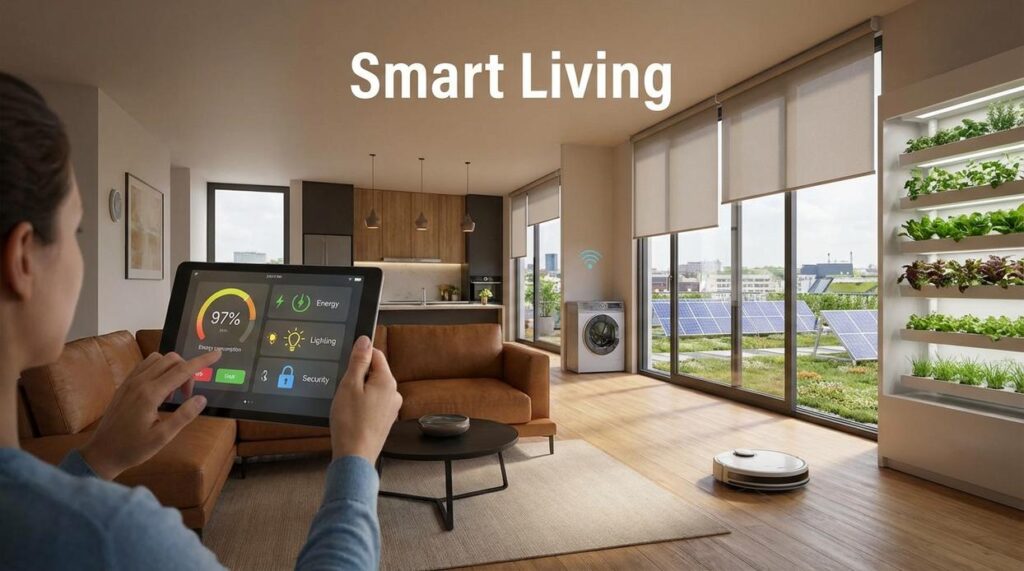
Then there’s the truly smart home. Thanks to massive Machine Type Communication (mMTC)—a 5G feature that allows thousands of low-power devices to connect simultaneously—your lights, locks, cameras, and sensors communicate without choking your router. Sound familiar: buffering security feeds when everyone’s online? With 5G, that congestion eases because devices don’t rely solely on local bandwidth.
Consider how 5g smart devices impact everyday setups:
- Faster response from smart locks and doorbells
- More stable camera feeds
- Reduced interference between connected gadgets
Moreover, enhanced peripheral integration changes portable gaming and productivity. A low-latency connection (meaning minimal delay between input and response) keeps wireless gamepads, keyboards, and styluses responsive—even off Wi-Fi. Ever noticed slight input lag during cloud gaming? That delay shrinks significantly with stronger 5G backbones (GSMA, 2023).
Finally, what about crowded spaces? Stadiums and transit hubs used to overwhelm 4G networks. 5G’s higher capacity supports far more simultaneous users (Qualcomm, 2022). So next time you post from a packed arena, ask yourself: would this upload have failed five years ago?
For broader context, explore sustainable technology innovations changing the industry.
The Trade-Offs: Navigating 5G’s Challenges
The Battery Drain Dilemma
First, let’s talk power. 5G modems can consume more battery than 4G because they process higher data speeds and connect to multiple bands simultaneously. In real-world use—like streaming a live game on your commute—you may notice your battery dipping faster than expected (yes, even on newer phones).
To manage this, enable smart network switching in your device settings. This feature automatically shifts between 4G and 5G based on signal strength. You can also limit 5G to “Auto” mode instead of “Always On” and reduce background app refresh.
Inconsistent Coverage and Spectrum Differences
Not all 5G is equal. Sub-6 GHz offers wider coverage but moderate speed boosts, while mmWave delivers ultra-fast performance in dense urban pockets. So if your blazing speed test only works near a stadium, that’s why. Understanding this helps set realistic expectations about 5g smart devices impact.
The Hardware Requirement
Finally, 5G requires a compatible device and plan. Before upgrading, check carrier coverage maps and confirm your phone supports the right bands. Otherwise, you’re paying for potential you can’t access.
Your Connected Future is Now More Responsive
You came here to understand how 5G truly changes your digital experience—and now you can see that it’s more than speed. The 5g smart devices impact is about eliminating lag, reducing congestion, and unlocking seamless performance across gaming, streaming, and connected ecosystems. No more frustrating delays or unstable connections holding you back.
To get the full advantage, choose devices equipped with efficient 5G modems and confirm strong network coverage in your area. Don’t settle for outdated performance. Upgrade your setup, optimize your connectivity, and experience the instant, responsive future your devices were built to deliver.
 Lillie W. writes the kind of device integration strategies content that people actually send to each other. Not because it's flashy or controversial, but because it's the sort of thing where you read it and immediately think of three people who need to see it. Lillie has a talent for identifying the questions that a lot of people have but haven't quite figured out how to articulate yet — and then answering them properly.
They covers a lot of ground: Device Integration Strategies, Controller Setup and Maintenance Hacks, Tech Pulse Updates, and plenty of adjacent territory that doesn't always get treated with the same seriousness. The consistency across all of it is a certain kind of respect for the reader. Lillie doesn't assume people are stupid, and they doesn't assume they know everything either. They writes for someone who is genuinely trying to figure something out — because that's usually who's actually reading. That assumption shapes everything from how they structures an explanation to how much background they includes before getting to the point.
Beyond the practical stuff, there's something in Lillie's writing that reflects a real investment in the subject — not performed enthusiasm, but the kind of sustained interest that produces insight over time. They has been paying attention to device integration strategies long enough that they notices things a more casual observer would miss. That depth shows up in the work in ways that are hard to fake.
Lillie W. writes the kind of device integration strategies content that people actually send to each other. Not because it's flashy or controversial, but because it's the sort of thing where you read it and immediately think of three people who need to see it. Lillie has a talent for identifying the questions that a lot of people have but haven't quite figured out how to articulate yet — and then answering them properly.
They covers a lot of ground: Device Integration Strategies, Controller Setup and Maintenance Hacks, Tech Pulse Updates, and plenty of adjacent territory that doesn't always get treated with the same seriousness. The consistency across all of it is a certain kind of respect for the reader. Lillie doesn't assume people are stupid, and they doesn't assume they know everything either. They writes for someone who is genuinely trying to figure something out — because that's usually who's actually reading. That assumption shapes everything from how they structures an explanation to how much background they includes before getting to the point.
Beyond the practical stuff, there's something in Lillie's writing that reflects a real investment in the subject — not performed enthusiasm, but the kind of sustained interest that produces insight over time. They has been paying attention to device integration strategies long enough that they notices things a more casual observer would miss. That depth shows up in the work in ways that are hard to fake.