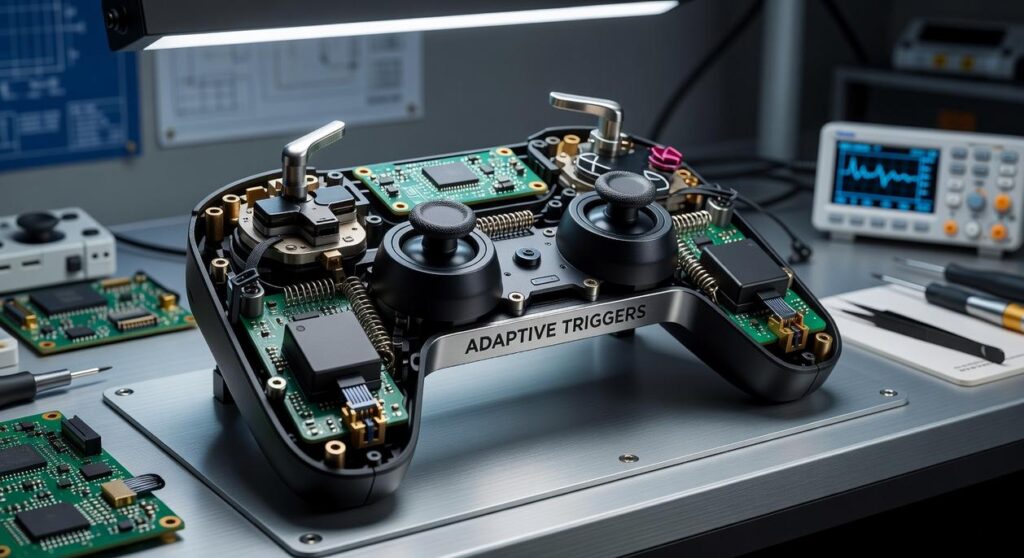

Modern gaming isn’t just about graphics and speed—it’s about how seamlessly your controller connects, responds, and adapts to every move you make. If you’re searching for clearer insights into gamepad innovations, compatibility solutions, and smarter device integration strategies, this article is built for you.
With rapid advancements like adaptive trigger technology, evolving firmware updates, and cross-platform functionality, choosing and configuring the right controller setup can feel overwhelming. Many gamers struggle with input lag, limited compatibility, or underutilized features simply because reliable, up-to-date guidance is hard to find.
Here, you’ll get focused analysis on the latest tech pulse updates, practical controller setup improvements, and proven integration strategies that enhance performance across devices. Our insights are grounded in hands-on testing, technical evaluation, and continuous monitoring of emerging hardware trends—so you can make informed decisions, optimize your setup, and unlock the full potential of your gamepad experience.
Beyond the Click: The New Era of Trigger Precision
Modern controllers are no longer simple plastic levers. They’re precision instruments built to eliminate input lag—the delay between pressing a button and seeing action on screen—and inconsistent actuation, meaning the point where a press actually registers.
• Hall effect sensors use magnetic fields instead of physical contact, reducing wear and boosting accuracy (yes, magnets in your trigger).
• Adjustable trigger stops shorten travel distance for faster shots.
• Haptic feedback simulates tension and recoil.
Adaptive trigger technology adds dynamic resistance. Speculation: future esports may standardize these features for competitive parity across major tournament circuits.
The Core Technology: Hall Effect vs. Potentiometers
The Old Standard
Traditional controllers rely on potentiometers—components that measure electrical resistance through physical contact. When you press a trigger, a small wiper slides across a resistive track, translating movement into input. Simple, affordable, effective.
But here’s the catch: physical contact means friction. Friction means wear. And wear leads to the dreaded stick drift. Ever nudged a trigger lightly and noticed inconsistent response? Or felt that scratchy resistance after months of play? That’s the internal contact surface degrading over time (like a dimmer switch that starts crackling after years in your living room).
Sound familiar?
The Magnetic Revolution
Now enter Hall effect sensors. Instead of relying on contact, they measure changes in a magnetic field to detect movement. No scraping. No rubbing. Just clean magnetic data translating into position input.
It’s a genuine technological leap. If potentiometers are analog vinyl records, Hall sensors are high-resolution digital streams (and yes, both have fans—but one skips less).
Why It Matters
The benefits aren’t subtle:
- Near-zero input lag because signals are detected instantly through magnetic variance
- Unparalleled durability with no physical wear points
- Consistent, precise actuation every single press
Have you ever wondered why some triggers feel identical after two years while others feel “off” within months?
That’s the difference.
In setups using adaptive trigger technology, Hall sensors provide smoother resistance scaling without mechanical degradation.
Practically speaking, it’s the difference between a dimmer switch that grows scratchy over time and a perfectly smooth, digital one that never fails. Which would you rather trust in a clutch moment?
Customization Unleashed: Mechanical and Software Adjustments
Modern controllers aren’t just input devices—they’re precision tools. And when you understand how to fine-tune them, you can dramatically improve both speed and control.
Mechanical Advantage: Adjustable Trigger Stops
Let’s start with adjustable trigger stops. These are small physical switches or sliders on the back of a controller that limit how far a trigger can travel. In simple terms, they shorten the pull distance.
Why does that matter? In most FPS (first-person shooter) games, you don’t need a full trigger pull to fire. A shorter pull means:
- Faster shot registration
- Quicker follow-up shots
- Reduced finger fatigue during long sessions
If you’ve ever lost a firefight by milliseconds, this is the kind of tweak that helps (yes, those milliseconds matter).
That said, some players argue trigger stops are unnecessary and that skill alone should dictate performance. While mechanics always matter most, reducing physical delay removes one more barrier between intention and action—which is hard to ignore.
Software-Level Tuning: Dead Zone and Actuation Point Customization
Next comes software customization. Through companion apps, you can adjust:
- Dead zone: The amount you press before input begins registering.
- Actuation point: The exact point where the trigger “fires” digitally.
With adaptive trigger technology, you can define precisely how much pressure activates an input. Instead of relying on factory defaults, you tailor response to your playstyle.
For example:
- Racing Game Setup – Use a long, smooth trigger pull with a wider actuation range. This allows nuanced throttle control when exiting corners.
- Shooter Setup – Create a “hair-trigger” by minimizing the dead zone and setting an instant actuation point for rapid firing.
Finally, the real magic happens when you combine mechanical stops with software tuning. Physical limits reduce travel distance, while digital adjustments refine sensitivity. Together, they create a controller that feels purpose-built—whether you’re drifting through apex turns or clearing tight corridors.
Pro tip: Test adjustments in small increments. Micro-changes often produce the biggest performance gains.
Haptic Feedback: Feeling the Game Through Your Fingertips
More Than Just a Rumble
Basic controller vibration is a single, blunt signal: something happened. Haptic feedback, by contrast, delivers localized, nuanced sensations directly to your trigger fingers. Instead of your whole controller buzzing like a phone on silent, you feel specific tension, resistance, or recoil exactly where the action occurs. That precision translates into clearer gameplay information—and better performance.
How It Works
Inside modern triggers are tiny motors or actuators (compact mechanical components that create controlled movement). These components power adaptive trigger technology, dynamically adjusting resistance in real time. When a game sends a signal, the trigger can stiffen, pulse, or push back—giving your hands physical data, not just visual cues.
Enhancing Immersion
Draw a bow and feel the string tighten. Fire a jammed weapon and sense the trigger lock. Tap the brakes in a racing game and notice the subtle feedback of anti-lock braking. Different guns kick differently—shotguns punch, pistols snap. It’s the difference between watching an action movie and feeling like you’re in one (yes, even if you’re still on your couch).
Is It a Gimmick?
Some argue it’s unnecessary flair. But targeted resistance improves reaction timing and situational awareness—benefits standard rumble can’t match. Pro tip: lower trigger strength in competitive shooters for faster resets. For more innovation insights, explore the future of modular gamepad design.
The Competitive Impact: How Advanced Triggers Change Gameplay
Advanced triggers don’t just “feel better”—they redefine performance. The difference becomes obvious when you compare standard triggers vs. optimized setups side by side.
First-Person Shooters (FPS)
- Standard: Longer pull, slower reset, marginal delay between shots.
- Hair-trigger setup: Minimal travel, faster semi-auto fire, quicker aiming down sights (ADS).
In tight gunfights, milliseconds matter (just ask any Call of Duty ranked grinder).
Racing Simulators
- Basic triggers: On/off-style throttle control, higher risk of wheel spin or brake lock-up.
- Hall effect sensors with adaptive trigger technology: Smooth, progressive input for precise acceleration and braking.
That nuance can mean shaving tenths off lap times.
Action-Adventure Games
- Standard rumble: Generic vibration.
- Advanced haptics: Tension when drawing a bow, resistance when pulling a lever, impact when casting spells.
It’s less about winning—and more about immersion.
Some argue skill outweighs hardware. True. But optimized triggers amplify skill rather than replace it.
What This Technology Means for Your Next Controller
We’ve covered how magnetic sensors, adjustable stops, and haptic feedback elevate trigger performance. So what does that mean for you? Simply put, fewer missed shots and longer-lasting gear. “I switched to Hall effect triggers,” one competitive player told me, “and the stickiness just vanished.” By replacing physical friction with magnetic fields, manufacturers reduce wear-and-tear and input lag. Meanwhile, adjustable actuation and adaptive trigger technology add personalization layers. As a developer recently said, “Customization is control.” When shopping, look for those specs first. For serious players, reliability becomes a competitive edge daily.
Level Up Your Controller Experience
You came here looking for clarity on how to optimize your controller setup, improve compatibility, and get the most out of modern features like adaptive trigger technology. Now you understand how the right configuration, seamless device integration, and smart setup choices can transform the way you play.
The frustration of input lag, poor compatibility, or underperforming features doesn’t have to hold you back anymore. With the right knowledge and tools, your controller can deliver precision, immersion, and responsiveness exactly the way it was designed to.
If you’re ready to eliminate setup headaches and unlock peak performance, explore the latest compatibility guides and integration strategies now. Join thousands of gamers who rely on expert-backed insights to fine-tune their gear and stay ahead of the curve. Don’t settle for average performance—upgrade your experience today.
 Director of Content & Community Engagement
Lillie Wallerainer oversees content development and community engagement for HSS Gamepad. She translates complex technical insights into clear, user-friendly guides and updates. Lillie manages tech pulse publications and ensures editorial accuracy across the platform. With a strong background in digital communications, she strengthens brand voice and audience connection. Her work helps make advanced controller knowledge accessible to gamers at every level.
Director of Content & Community Engagement
Lillie Wallerainer oversees content development and community engagement for HSS Gamepad. She translates complex technical insights into clear, user-friendly guides and updates. Lillie manages tech pulse publications and ensures editorial accuracy across the platform. With a strong background in digital communications, she strengthens brand voice and audience connection. Her work helps make advanced controller knowledge accessible to gamers at every level.