
If you’re searching for smarter ways to optimize your controller setup and get the most out of your gaming experience, you’re in the right place. From seamless device integration to next-level responsiveness on ai powered devices, today’s gamepad technology is evolving faster than ever—and keeping up can feel overwhelming.
This article breaks down the latest HSS compatibility updates, controller innovations, and integration strategies that actually make a difference in real-world gameplay. Whether you’re troubleshooting connectivity issues, exploring advanced configuration options, or upgrading your setup for competitive performance, you’ll find clear, practical guidance here.
Our insights are built on hands-on testing, technical analysis, and ongoing monitoring of emerging tech trends in the controller ecosystem. We focus on what works, what’s changing, and what you need to know right now—so you can make informed decisions and play with confidence.
The Smart Revolution: How AI is Redefining Our Gadgets
Start with an anecdote about upgrading your phone and noticing it suddenly predicts your texts before you type them. That moment made me question the buzz. Are these just “smart” features, or something deeper? A smart device follows pre-set rules. A true AI device learns patterns, adapts, and makes predictions (think Netflix recommendations evolving with your taste; Netflix Tech Blog, 2023). Today’s ai powered devices increasingly run on edge AI—processing data on-device instead of the cloud—meaning:
- Faster responses
- More privacy
- Personalized performance
Pro tip: Look for chips labeled “neural” or “AI engine.”
The AI in Your Pocket: Unpacking the Modern Smartphone
Your smartphone isn’t just a slab of glass and metal. It’s a pocket-sized supercomputer running on ARTIFICIAL INTELLIGENCE.
Computational Photography
Computational photography—software enhancing images after (and during) capture—powers features like Portrait Mode. Using semantic segmentation (AI that labels each pixel by subject, background, hair, etc.), your phone separates you from the backdrop with uncanny precision. Night Sight relies on image stacking, blending multiple exposures to reduce noise and brighten detail in low light (Google details this at https://ai.googleblog.com/2018/11/night-sight-seeing-in-dark-on-pixel.html). Scene recognition then auto-adjusts color, contrast, and shutter speed in real time.
Some argue this “fake” processing ruins authentic photography. Fair point. But photography has always involved manipulation—darkrooms, filters, lenses. AI simply does it faster (and in your pocket).
Intelligent Assistants
Modern assistants go beyond voice commands through natural language processing—AI that interprets conversational speech. Contextual awareness lets your phone suggest directions when it sees a calendar event with an address. Proactive assistance surfaces reminders before you ask.
Skeptics say it’s intrusive. Yet when tuned properly, these ai powered devices reduce friction in daily life (pro tip: review app permissions quarterly).
Performance and Battery Optimization
Adaptive battery systems learn usage patterns, prioritizing power for frequently opened apps. Predictive loading preps apps before you tap them, making everything feel instant.
Critics claim this limits control. Maybe. But most users prefer seamless speed over micromanagement (and fewer low-battery panics).
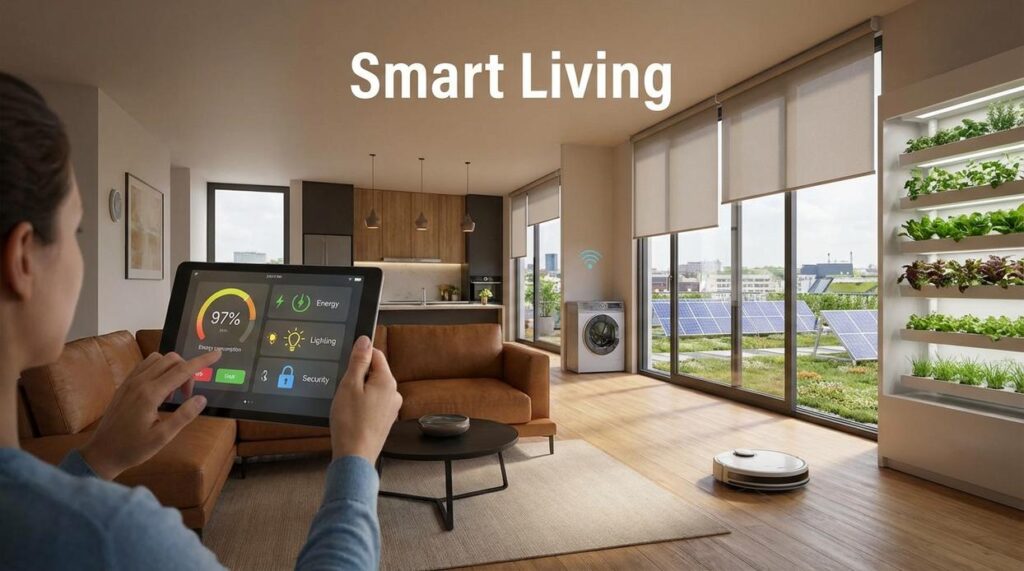
The Automated Home: AI for Seamless Living
Smart Speakers & Hubs
Remember Iron Man’s JARVIS? We’re not quite there—but we’re closer than most skeptics admit. Smart speakers use far-field voice recognition (microphones that detect speech across a room) and natural language processing to interpret commands over background noise. They also apply voice profiling, meaning the system distinguishes between users based on vocal patterns. So when you say “goodnight,” it can dim lights, lock doors, and lower the thermostat automatically.
Critics argue this is just glorified convenience. Fair. But when routines adapt based on occupancy or time of day, that’s machine learning—systems improving through data over time—not just timers with better PR.
Intelligent Security
If you’ve ever received 37 alerts because a tree branch moved, you understand the value of AI filtering. Modern cameras use computer vision (AI that interprets visual data) to differentiate people, packages, animals, and vehicles—reducing false alerts significantly (Parks Associates, 2023).
| Feature | What It Does | Why It Matters |
|———-|————–|—————-|
| Object Detection | Identifies people vs. pets | Fewer false alarms |
| Facial Recognition | Flags trusted visitors | Smarter access control |
Yes, privacy concerns are real. But encrypted storage and local processing in ai powered devices help mitigate risk (FTC, 2022).
Climate and Energy Control
Smart thermostats analyze sensor data and behavioral trends to optimize heating and cooling. According to ENERGY STAR, certified models can cut HVAC energy use by about 8–10%. Not exactly The Matrix, but still impressive.
Pro tip: enable eco-modes before peak-rate hours. Your wallet will notice.
Next-Level Immersion: AI in Gaming and Entertainment
Have you ever wondered why a bowstring in a game suddenly feels tighter right before you release it? Advanced haptics use artificial intelligence—systems that learn patterns from data—to interpret in-game events and translate them into nuanced vibrations. Modern controllers feature adaptive triggers that dynamically adjust resistance based on AI-driven context, like simulating brake pressure in a racing title. The result is deeper immersion (and occasionally sweaty palms).
On the visual side, AI-powered graphics are rewriting performance limits. Technologies like NVIDIA’s DLSS and AMD’s FSR use machine learning—algorithms trained to reconstruct images—to upscale lower-resolution frames into sharper visuals while boosting frame rates (NVIDIA, AMD). That means smoother gameplay without needing top-tier hardware. Who doesn’t want blockbuster visuals without upgrading every year?
And what about downtime? Streaming platforms on Apple TV or Roku rely on recommendation engines—AI models that analyze viewing habits—to surface what you’ll likely watch next (Netflix Tech Blog). Ever notice how uncannily accurate suggestions can be? Smart TVs also optimize picture and sound in real time, analyzing content to adjust brightness, contrast, and audio profiles automatically.
It’s not just consoles—ai powered devices across your living room are learning your preferences. Curious how this connects to edge processing? Explore the rise of edge computing in modern gadgets.
Beyond the Living Room: AI on the Go
AI is no longer stuck in your smart speaker. Instead, it travels with you.
Wearable Technology
Smartwatches and fitness trackers use sensor data—like heart rate variability (tiny changes in time between beats) and motion tracking—to deliver advanced insights. For example, sleep stage detection analyzes movement and pulse patterns to estimate REM cycles (yes, the dream phase). ECG analysis can flag heart rhythm irregularities such as atrial fibrillation, a condition affecting nearly 2% of people under 65 (CDC).
Practical tip: Enable irregular rhythm notifications in your watch settings and review weekly health summaries. Over time, predictive fitness coaching adjusts goals based on recovery data—so if you slept poorly, your device may scale back intensity (smart, right?).
The Modern Automobile
Meanwhile, AI powers Advanced Driver-Assistance Systems (ADAS). Lane-keeping assist uses cameras to detect road markings, while automatic emergency braking reacts faster than human reflexes (NHTSA reports reduced rear-end crashes with AEB).
To get the most from ai powered devices in your car, calibrate sensors after windshield replacements and customize adaptive cruise control distance settings for your commute.
AI is no longer a flashy add-on; it’s the quiet current running beneath every tap and swipe. Integrated intelligence turns devices into intuitive companions, smoothing friction, automating the boring stuff, and personalizing experiences so well it feels like your tech “gets” you (finally). Think less Iron Man spectacle, more Jarvis in your pocket. Critics argue this seamlessness risks overreach or dependency, and that’s fair. But when ai powered devices anticipate needs responsibly, they free time and mental space. Next up: on-device generative AI, crafting content and smarter assistants instantly, making technology a true daily partner. Seamless, contextual, creative, personal, proactive.
Level Up Your Controller Experience Today
You came here looking for clarity on gamepad innovations, seamless integration, and how to get the most out of your setup. Now you have a clear understanding of how the latest advancements — including ai powered devices — are reshaping performance, responsiveness, and cross-platform compatibility.
If you’ve ever struggled with lag, poor configuration, or devices that just won’t sync the way they should, you know how frustrating it can be. The right setup isn’t just a luxury — it’s the difference between winning and restarting.
The next step is simple: upgrade your configuration strategy, optimize your controller settings, and ensure your gear is fully compatible with modern ai powered devices. Don’t settle for outdated performance when smarter integration is within reach.
Join thousands of gamers and tech enthusiasts who rely on expert-backed insights and proven setup strategies to stay ahead. Take action now, refine your setup, and experience the precision and control you’ve been missing.
 Director of Content & Community Engagement
Lillie Wallerainer oversees content development and community engagement for HSS Gamepad. She translates complex technical insights into clear, user-friendly guides and updates. Lillie manages tech pulse publications and ensures editorial accuracy across the platform. With a strong background in digital communications, she strengthens brand voice and audience connection. Her work helps make advanced controller knowledge accessible to gamers at every level.
Director of Content & Community Engagement
Lillie Wallerainer oversees content development and community engagement for HSS Gamepad. She translates complex technical insights into clear, user-friendly guides and updates. Lillie manages tech pulse publications and ensures editorial accuracy across the platform. With a strong background in digital communications, she strengthens brand voice and audience connection. Her work helps make advanced controller knowledge accessible to gamers at every level.