
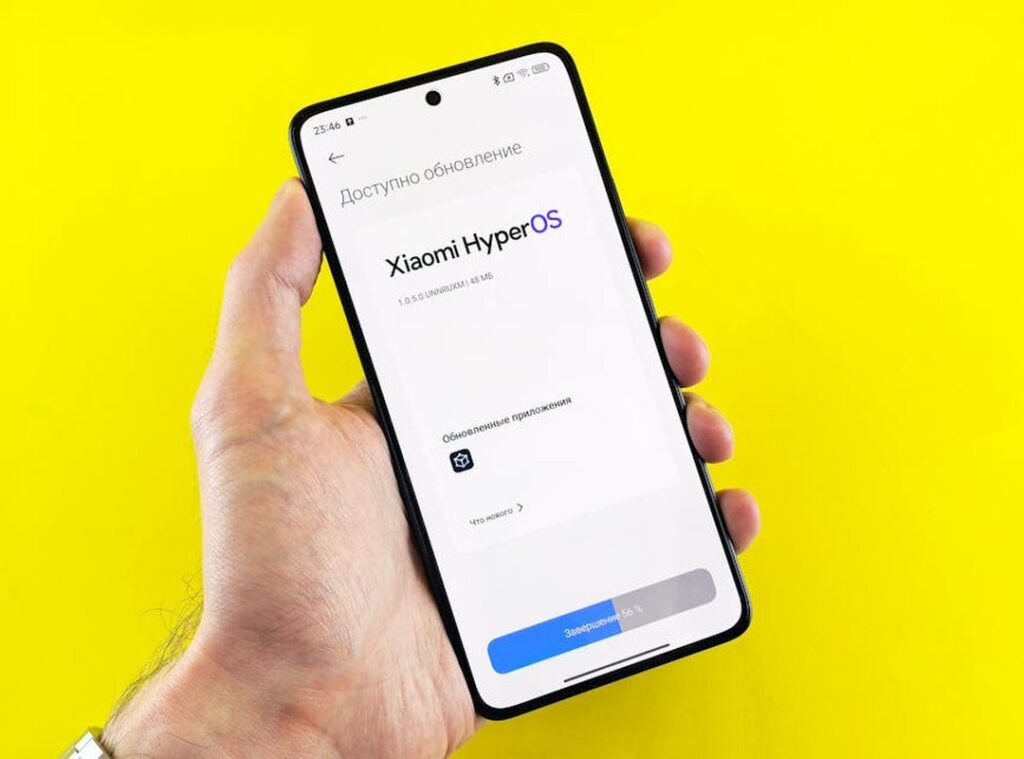
You’re tired of tech news that reads like a press release written by robots.
I am too.
Every day brings another headline about some “breakthrough” that changes nothing in your actual life. Another gadget launch. Another AI feature nobody asked for.
Another update you’ll ignore until your phone nags you.
This is not that.
This is Newest Tech Updates Jotechgeeks. No hype, no fluff, no jargon dressed up as insight.
We dig into why something matters before we tell you what it is.
Why does this chip redesign affect your laptop’s battery? Why does that new privacy law actually change how apps track you? We answer those questions.
Not the ones PR teams want you to ask.
I’ve spent years separating signal from noise.
You’ll walk away informed. Not overwhelmed. Not sold to.
Just clear. Concise. Real.
AI Just Got Real: Not Hype, Just Work
I watched the new Sora video model generate a 60-second clip of a cat chasing laser dots through a Tokyo alley. No stock footage. No editing.
Just text in, video out.
It’s not magic. It’s diffusion modeling. Basically teaching a neural net to reverse noise, like rewinding static until an image snaps into focus.
Over and over. Millions of times.
You’ve seen the blurry AI art. This is different. The physics hold.
Shadows move right. Paws hit pavement with weight. (I paused it three times to check.)
So what changes? Marketing teams now prototype ad concepts in minutes instead of weeks. A small agency I know cut their storyboard phase by 80%.
They fed Sora “vintage soda can rolling down a sunlit diner counter”. Got 12 usable takes. No location scout.
No prop master. Just prompt, tweak, render.
But here’s what no one’s saying loud enough: if your job is mostly stitching together existing assets, you’re already behind.
I tested it myself. Gave it “a nurse explaining diabetes to a 70-year-old woman in a clinic.” The lighting was warm. Her hands moved naturally.
The patient nodded. Not perfect (the) stethoscope clipped through her collarbone once. But close.
Close enough that hospitals are slowly trialing it for patient education videos.
Is this a leap? Yes. But not because it’s flawless.
Because it’s usable today. Not next year. Not after funding rounds.
Now.
The pitfall? Assuming it replaces judgment. It doesn’t.
It amplifies speed. And bias, if you’re not watching.
We track these shifts closely at Jotechgeeks, where we skip the fluff and call out what actually ships.
Newest Tech Updates Jotechgeeks aren’t about shiny demos. They’re about tools that land in your workflow tomorrow.
Some folks still think AI is PowerPoint slides and vaporware.
I’ve seen the raw files.
Hardware’s New Frontier: AI PCs Aren’t Just Faster. They’re
I held an AI PC last week. Not a laptop with a fancy sticker. One that thinks ahead.
It transcribed my meeting while summarizing action items. And flagged a scheduling conflict I missed. No cloud upload.
No lag. All local. That’s the on-device AI shift.
Not hype. Not vaporware. Real.
Most people still think “AI PC” means Intel or AMD slapped a new chip on an old design. Wrong. It means memory, storage, and silicon are tuned to run LLMs without calling home.
Compare that to Apple’s M-series machines. Brilliant at raw power (but) they don’t expose AI acceleration the same way. You can’t easily swap models or fine-tune locally.
Samsung? Still chasing battery life over inference speed. Google?
Stuck in Chromebook mode.
So who’s this for?
Developers building privacy-first apps. Journalists editing audio on trains. Students summarizing dense PDFs offline.
Not gamers. Not spreadsheet jockeys. Not people who just want “better Zoom.”
It’s not a must-buy yet. Driver support is spotty. Software is catching up.
But if you’ve ever waited 90 seconds for a cloud API to return a summary. You’ll feel the difference immediately.
Wait six months? You’ll get better tools. Buy now?
You’ll get first access (and) headaches.
I bought one anyway. (The drivers broke twice. Worth it.)
The real test isn’t benchmarks. It’s whether you stop reaching for your phone mid-task.
That’s the shift.
I covered this topic over in Latest Tech Updates.
You won’t notice it until you do.
Newest Tech Updates Jotechgeeks covers these changes as they land (not) after the press release dust settles.
Skip the spec wars. Ask instead: What can I do now that I couldn’t yesterday?
Answer that. Then decide.
The Digital Battlefield: Who’s Really Watching Your Data?

The EU just forced Apple to let apps bypass the App Store. Not just sideload. Full third-party stores.
On iOS.
I watched my cousin try to install a banking app from a developer site last week. It took six taps and two reboots. She gave up.
That’s the user experience we’re getting.
This isn’t about convenience. It’s about control. Apple used to decide what ran on your phone.
Now governments are saying: no, you don’t get final say.
Your data isn’t safer now. It’s just being shuffled between more players. Some of whom don’t even log in with two-factor.
Big Tech loses a little power. Governments gain oversight. You?
You get more choice (and) more responsibility.
Does that mean your TikTok feed will change tomorrow? No. But it means the next time an app asks for your location and your contacts and your microphone, you’ll have real alternatives.
Not just “accept or leave.”
The long-term shift? Power moves slowly. From boardrooms to courts to your settings screen.
One thing you can do today: Turn off ad tracking in iOS Settings > Privacy & Security > Tracking. It won’t stop everything (but) it stops the easy stuff.
I’m not sure how fast regulators will enforce this. Or whether Google will follow. But I am sure you should check where your data goes before you tap “Allow.”
For deeper context on what’s changing right now, the Latest Tech Updates Jotechgeeks page breaks it down without the legalese.
Newest Tech Updates Jotechgeeks is where I go first when something drops. Not because it’s perfect. But because it’s clear.
You should too.
On the Horizon: DePIN Is Already Here
DePIN stands for decentralized physical infrastructure networks.
It’s not sci-fi. It’s real. Right now.
People are deploying hardware. Sensors, routers, wireless hotspots. And connecting them to blockchains to earn tokens.
Not hype. Actual revenue.
I watched a community in Austin build a citywide LoRaWAN network using DePIN last year. No VC funding. Just neighbors sharing bandwidth.
This isn’t “coming soon.” It’s scaling now.
Why does it matter? Because centralized infrastructure is slow, expensive, and brittle. DePIN flips that script.
You own the node. You earn when it’s used. You decide where it goes.
No gatekeepers. No middlemen taking 30%.
It won’t replace every telecom. But it will undercut them in coverage gaps, rural areas, and edge use cases.
The next 3 years? DePIN goes from fringe to functional.
If you’re waiting for the “big announcement,” you’re already behind.
For context on how this fits into broader shifts, check out What Is Technology Update Jotechgeeks.
That’s where I track the Newest Tech Updates Jotechgeeks actually care about.
Stay Informed, Not Overwhelmed
I’ve seen too many people drown in tech noise. You open a site. You scroll.
You close it (still) confused.
That’s not your fault. It’s bad curation.
Real understanding starts with why. Not just what shipped today. Why does this AI change how you work?
Why does that chip matter to your battery life? Why should you care about that new rule?
You don’t need more headlines.
You need fewer, sharper ones.
Newest Tech Updates Jotechgeeks cuts through the clutter. No fluff. No hype.
Just analysis that respects your time and your brain.
You’re tired of guessing what matters.
So stop guessing.
Check back every week.
That’s all it takes.
 Evan Taylorainser writes the kind of device integration strategies content that people actually send to each other. Not because it's flashy or controversial, but because it's the sort of thing where you read it and immediately think of three people who need to see it. Evan has a talent for identifying the questions that a lot of people have but haven't quite figured out how to articulate yet — and then answering them properly.
They covers a lot of ground: Device Integration Strategies, Tech Pulse Updates, HSS Peripheral Compatibility Insights, and plenty of adjacent territory that doesn't always get treated with the same seriousness. The consistency across all of it is a certain kind of respect for the reader. Evan doesn't assume people are stupid, and they doesn't assume they know everything either. They writes for someone who is genuinely trying to figure something out — because that's usually who's actually reading. That assumption shapes everything from how they structures an explanation to how much background they includes before getting to the point.
Beyond the practical stuff, there's something in Evan's writing that reflects a real investment in the subject — not performed enthusiasm, but the kind of sustained interest that produces insight over time. They has been paying attention to device integration strategies long enough that they notices things a more casual observer would miss. That depth shows up in the work in ways that are hard to fake.
Evan Taylorainser writes the kind of device integration strategies content that people actually send to each other. Not because it's flashy or controversial, but because it's the sort of thing where you read it and immediately think of three people who need to see it. Evan has a talent for identifying the questions that a lot of people have but haven't quite figured out how to articulate yet — and then answering them properly.
They covers a lot of ground: Device Integration Strategies, Tech Pulse Updates, HSS Peripheral Compatibility Insights, and plenty of adjacent territory that doesn't always get treated with the same seriousness. The consistency across all of it is a certain kind of respect for the reader. Evan doesn't assume people are stupid, and they doesn't assume they know everything either. They writes for someone who is genuinely trying to figure something out — because that's usually who's actually reading. That assumption shapes everything from how they structures an explanation to how much background they includes before getting to the point.
Beyond the practical stuff, there's something in Evan's writing that reflects a real investment in the subject — not performed enthusiasm, but the kind of sustained interest that produces insight over time. They has been paying attention to device integration strategies long enough that they notices things a more casual observer would miss. That depth shows up in the work in ways that are hard to fake.